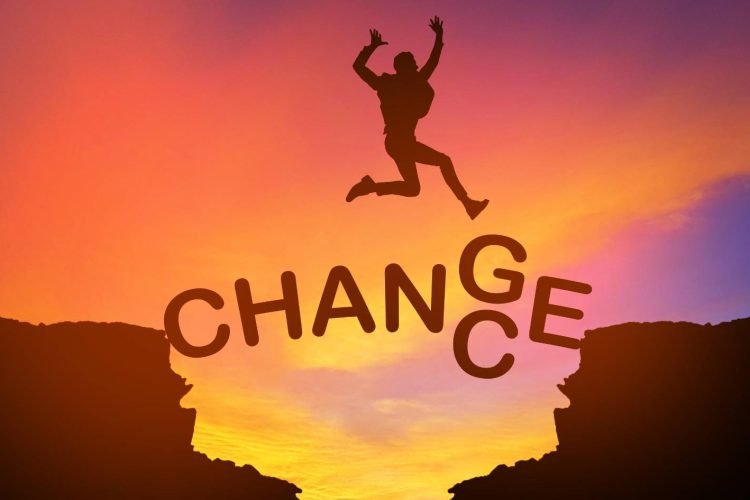




We live in an era of unprecedented human optimization. We are a generation obsessed with the concept of the “Best Version of Myself.” We wake up at 5:00 AM to join the “5 AM Club,” we fuel our bodies with bio-hacked diets, we listen to high-performance podcasts at 1.5x speed during our commutes, and our bedside tables are stacked with bestsellers on Atomic Habits, Deep Work, and Emotional Intelligence. We are masters of addition. We believe that if we just add one more skill, one more routine, or one more affirmation, we will finally unlock the door to the life we desire.
Yet, despite this relentless pursuit of growth, many of us feel more fragmented than ever. We are functionally successful but internally exhausted. We have the “perfect” habits on paper, but our minds are a chaotic battlefield of anxiety, comparison, and “unfinished business.”
The hard truth is this: Most self-development fails because it tries to build a skyscraper on a foundation cluttered with old wreckage. You are trying to install a new, sophisticated “software” of success while your internal “hardware” is still bogged down by the “photos” of your past. To reach your full potential, you don’t need another habit. You need the final, missing piece of the puzzle—The Art of Emptying.
The Reflection: Why ‘Adding’ Isn’t Enough
Before we dive into the solution, we must engage in a moment of honest Reflection. Look back at your last year of self-improvement. How much of that information did you actually embody? Why do we find ourselves re-reading the same productivity tips while still struggling with procrastination?
The reason is Cognitive Overload. Every experience you’ve had—every failure that stung, every criticism that lingered, and every “perfect version of you” that you haven’t reached yet—is stored in your subconscious as a high-definition “Internal Photo.” When you try to “add” a new positive habit without first reflecting on and emptying the old mental snapshots, you create internal friction. It’s like trying to pour fresh, organic tea into a cup that is already full of stagnant water. No matter how high the quality of the new tea, it will be tainted by what was already there. Reflection is the process of looking into the cup and realizing what needs to be poured out.
The Science of Subtraction: Clearing the Neural Pathway
Modern neuroscience provides a clear explanation for why The Art of Emptying is the ultimate performance tool. Our brains have a limited amount of “working memory” and cognitive energy. When your mind is cluttered with the “debris” of daily stress and past regrets, your Prefrontal Cortex—the seat of executive function, focus, and willpower—is under constant siege.
When you hold onto the “photo” of a business deal that went wrong three years ago, or the anxiety of a future deadline, your brain stays in a state of low-level “Hyper-Vigilance.” This keeps your Cortisol levels elevated and your nervous system stuck in a “Fight or Flight” loop. In this state, your brain cannot access the “Flow State”—that mystical zone where peak performance feels effortless.
By practicing The Art of Emptying, you are engaging in a systematic Neural Decompression. You aren’t just “relaxing”; you are actively identifying the “Mind-Photos” that are consuming your bandwidth and discarding them. When the noise is subtracted, your biological operating system can finally run at its intended speed. You don’t become faster by trying harder; you become faster by removing the friction.
The Art of Emptying: From ‘Human Doing’ to ‘Human Being’
The greatest trap in self-development is the “Someday” syndrome. Someday, when I have X amount of money, Y amount of followers, and Z amount of discipline, I will be happy. This is a “Photo of a Future Self” that keeps you trapped in a state of perpetual “not-enoughness.”
The Art of Emptying teaches us to discard even these idealized photos. Why? Because the most powerful version of you doesn’t exist in the future—it exists in the Absolute Present. When you reflect on the role your “Ego-Images” play in your life, you realize that most of your drive comes from a place of lacking. You are running away from an old photo of being “inadequate” toward a new photo of being “perfect.” This is exhausting.
When you learn to empty both the past and the future, you arrive at Zero-Mind. This is the state where the world’s greatest leaders, artists, and athletes operate. They aren’t thinking about their goals while they work; they are so empty of self-consciousness that the work flows through them. This is the true meaning of mastery: acting with 100% intent and 0% interference.
The Missing Link: Reflection as the Bridge to Freedom
To master The Art of Emptying, you must first master the bridge: Reflection. Reflection is not “rumination” (which is just replaying the photos over and over). True reflection is a detached observation of your mental landscape.
Imagine you are a gallery owner. Your mind is the gallery. Currently, the walls are covered in thousands of old, dusty, and overlapping photographs. Reflection is the act of walking through the gallery and pointing at a specific photo—perhaps a memory of a harsh word from a parent or a fear of public speaking—and saying, “This is just a photo. It is not me. It is not the truth of this moment.”
Once you have identified the photo through reflection, the act of Emptying becomes easy. You simply take the photo off the wall and discard it. You don’t argue with it. You don’t try to “fix” it. You just subtract it.
The more you reflect, the more you realize that your “personality” is often just a collection of these old photos. As you empty them, you don’t lose yourself. On the contrary, you find the radiant, capable, and peaceful core that was always there, buried under the noise.
Integration: Making Emptying Your Foundational Habit
If you are serious about your self-development journey, you must stop treating meditation as an “optional extra” or a “stress-relief tool.” It is the foundational layer of all other habits.
- Without an empty mind, Deep Work is just “busy work” fueled by anxiety.
- Without an empty mind, Positive Affirmations are just whispers in a hurricane.
- Without an empty mind, Strategic Planning is just a reaction to old fears.
The Art of Emptying ensures that every other action you take is rooted in clarity rather than clutter. It is the practice of “Mental Hygiene.” You wouldn’t dream of going a week without brushing your teeth; why would you go a day without brushing your mind of the emotional plaque that accumulates every hour?
Conclusion: The Journey of Subtraction
The final stage of your growth isn’t about becoming “More.” It is about becoming “Nothing”—specifically, nothing but the pure potential of the present moment.
Self-development shouldn’t feel like a heavy backpack you are forced to carry up a mountain. If it does, it’s because you are carrying too many “photos” of how the journey should look. The Art of Emptying gives you the permission to drop the backpack.
The last piece of your puzzle isn’t out there in a new book, a new seminar, or a new productivity app. It is right here, in the space you create when you finally learn how to let go. You don’t find the best version of yourself by building it piece by piece; you find it by discarding everything that isn’t you until only the truth remains.
Ready to find the missing piece? Stop trying to “fix” your life through more effort. Start your journey of subtraction today. Empty the cup, clear the gallery, and finally meet the person you were always meant to be.